Reflections from a recent Sydney simulation meeting led by Dr Davina Julliard and Prof Walter Eppich
Picture a classroom full of children with their hands in the air, impatient to contribute. They have ideas, questions and the confidence to be wrong in public.

Healthcare education can gradually socialise this instinct out of us, tempering our willingness to offer a suggestion, raise a hand or speak up.
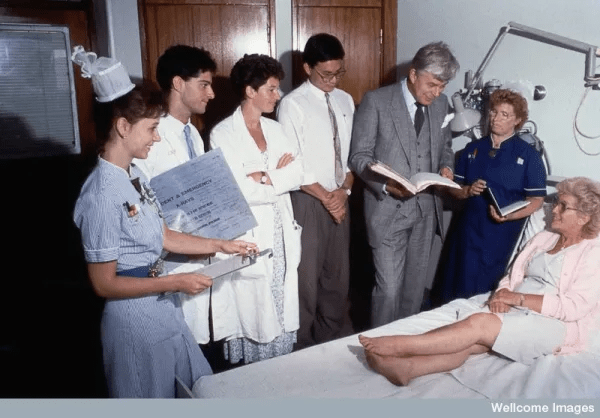
Through hierarchy, aggressive questioning, fear of embarrassment and repeated exposure to incivility, enthusiastic learners can become cautious observers. By the time they join clinical teams, many have learned that silence is safer than curiosity.
That matters because health professions education is intensely social. We learn through conversations, shared work, observation, challenge and feedback. This is important. In a nutshell we do not learn merely through absorbing information (‘aquisition’). When communication contracts, learning contracts with it. Rudeness and incivility do more than create an unpleasant workplace: they consume cognitive bandwidth, impair collaboration and make people less willing to ask questions or offer an alternative view.
Speaking up in Healthcare – a special kind of communication failure
Speaking up sits at the intersection of learning, teamwork and patient safety. Unlike an unnoticed failure of closed-loop communication, the failure to speak is often experienced consciously:
I can see the problem. I know I should say something. I am choosing not to.
People remain silent because they fear being wrong, appearing incompetent, challenging authority or attracting hostility. Witnessing someone else being dismissed may be enough to suppress the next contribution.

The phenonema of professional “tribes” add another layer. These functional healthcare tribes create powerful bonds with each other. A good example of a bonded tribal team is an Emergency Department staff group. Of course, in the ED we are multidisciplinary. We are in it together – standing against the world (and the rest of the hospital).
In these close nit groups we feel togehter and social identity shapes who receives the benefit of the doubt. Members of an established in-group may be forgiven for uncertainty or directness, while those perceived as outsiders can be judged more harshly for the same behaviour. Interprofessional education cannot solve this merely by placing different professions in the same room.
Teams must recognise their limitations and issues with tribalisim and actively move from “them” to “us.”
Learning before, during and after events in Healthcare
What are some of the mitigations of these challenges?
Team reflection is often treated as something that happens afterwards, in a formal debrief. Recent work suggests a more useful rhythm: reflection before, during and after action.
Before the Event/Shift: create readiness
A short pre-event huddle can surface concerns, clarify roles and create a shared mental model. Meister and colleagues found that pre-action team reflection promoted inclusive leadership, planning and psychological safety.
The language used by leaders matters. Compare:
“What questions do you have?” with: “I imagine you have questions. What are they?”
The first permits contribution. The second expects it.
Other useful invitations to have up your sleave as a team member include:
- “This patient is a mystery—I need your brainpower.”
- “What are we missing?”
- “What should our next step be?”
This is not cosmetic or ‘woke’ language. Pronouns signal membership, ownership and permission to participate.
During the Event/Shift: pause briefly without stopping the work and invite input
Schmutz and colleagues describe in-action team reflexivity: brief moments during a clinical event when the team consciously reviews its goals, information and strategy.
This need not become a lengthy discussion. A recap may take 20 seconds:
“Let us pause. Here is where we are. Here is what we have tried. What has changed, and what are we missing?”
These moments appear particularly valuable in large teams, where information becomes fragmented and assumptions multiply. The leader’s role is not simply to issue more instructions, but to maintain situational awareness and make it possible for others to update the plan. We have a specific approach to these summaries – CLICK HERE (page 12)
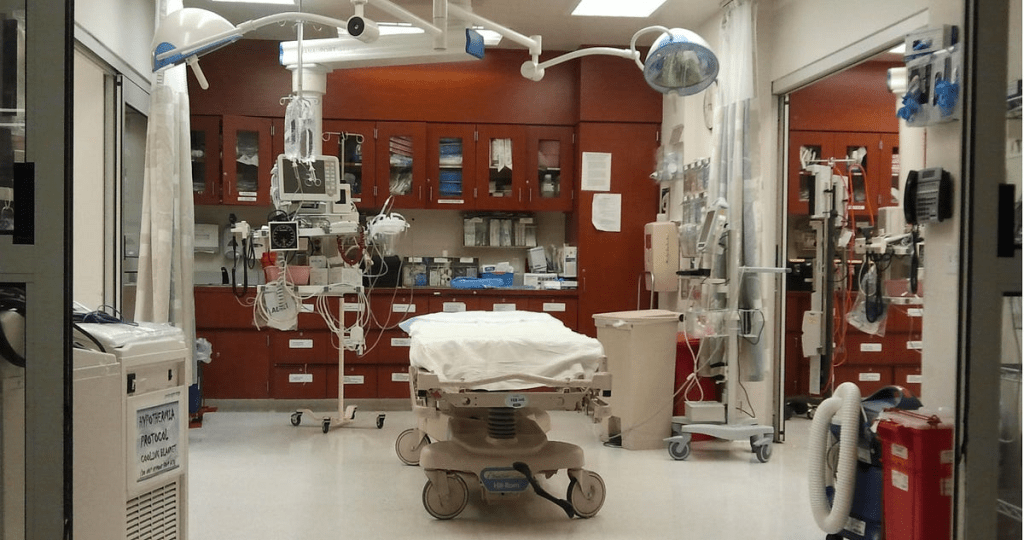
After the Event/Shift: learn, but do not debrief indiscriminately
After-action reviews and educational debriefings can have substantial effects on learning and performance, particularly when tasks are complex and provide little intrinsic feedback. However, enthusiasm needs restraint.
An educational debrief is not the same as mandatory psychological processing after a traumatic event. Poorly timed, coercive or facilitator-centred debriefing may create additional burden rather than recovery. The purpose, timing and needs of participants must remain explicit.
Sometimes the right response is a structured learning conversation. Sometimes it is a brief operational check-in, practical support and the option to talk later.

Lessons from Antarctica
Recent research involving Antarctic teams offers a useful mirror for healthcare. In confined and demanding environments, team affect is shaped by social interactions, mission demands and environmental stressors—and emotional states can cross over between team members.
Five practical coping strategies emerged: reframing, praise, backup behaviour, planning routines and playfulness.

What the authors found in Extreme Antartic Teams – “In Study 1, we conducted interviews with eight experienced Antarctic researchers to identify recurring affective events. In Study 2, we collected detailed quantitative daily diaries and qualitative reflections from a two-person team over a 19-day expedition at King George Island, Antarctica. Results show that PA was fostered by social, mission-related, and ecopsychological uplifts, while NA was triggered by social, physical, and environmental hassles. A crossover effect of affective states between team members was observed. Five coping strategies—reframing, praise, backup behavior, planning routines, and playfulness—emerged as effective in mitigating NA and enhancing PA.”
These are not uniquely seen in extreme environments like the Antarctic (although there is benefit to studying humans outside of our own cultures). Such environments teach us something true about what is visible in effective emergency teams every day:
- A colleague reframes a setback without minimising it.
- Someone notices good work and says so.
- A team member steps in before another becomes overwhelmed.
- The team returns to a familiar routine when conditions become chaotic.
- A moment of appropriate humour releases tension and restores connection.
Technical expertise remains essential. But expertise is easier to access when the social environment allows people to think aloud, question assumptions and recover together.
Take Homes – for your next shift
On your next nursing,medical or allied health shift (or during any stressful healthcare event) try three things:
- Before the shift: invite input and establish that uncertainty can be shared.
- During the event and in the heat of battle: pause briefly, recap and ask what the team is missing.
- After the shift: create an opportunity to learn, without forcing people to disclose or process emotions.
- Use we, us and our deliberately in your language…
“This patient is a mystery. I need your brainpower.”
“What are we missing?”
“What should our next step be?”
“I imagine you have questions—what are they?”
- Healthcare does not need quieter learners or more obedient teams. It needs people who are willing – and permitted – to put their hands back up and lean into life long learning…

References
Eppich WJ, Schmutz JB. From “them” to “us”: bridging group boundaries through team inclusiveness. Medical Education. 2019;53:756–758.
Fagerdal B, et al. Exploring the role of leaders in enabling adaptive capacity in hospital teams. BMC Health Services Research. 2022;22:908.
Keiser NL, Arthur W Jr. A meta-analysis of task and training characteristics that contribute to or attenuate the effectiveness of the after-action review. Journal of Business and Psychology. 2022;37:953–976.
Kolbe M, et al. Team debriefings in healthcare: aligning intention and impact. BMJ. 2021;374:n2042.
Meister R, et al. “You can’t have an ego in this game”: a simulation-primed qualitative inquiry of team reflection in paediatrics. Medical Education. 2026;60:782–791.
Nembhard IM, Edmondson AC. Making it safe: the effects of leader inclusiveness and professional status on psychological safety and improvement efforts in healthcare teams. Journal of Organizational Behavior. 2006;27:941–966.
Schmutz JB, et al. Reflection in the heat of the moment: the role of in-action team reflexivity in health care emergency teams. Journal of Organizational Behavior. 2018;39:749–765.
Schmutz JB, et al. Navigating affective extremes in Antarctica: coping strategies for individuals and teams in confined environments. Environment and Behavior. DOI: 10.1177/00139165261427136.

